Is AI Really Taking Over Jobs, or Is It Creating More Opportunities?
Is AI Really Taking Over Jobs, or Is It Creating More Opportunities?
The rise of Artificial Intelligence (AI) has sparked debates worldwide, with one pressing question taking center stage: Is AI taking over jobs, or is it creating more opportunities? For years, movies, books, and media have portrayed AI as both a boon and a bane — ushering in an era of unprecedented innovation while threatening traditional employment structures. But what does the data and real-world application of AI suggest?

This comprehensive analysis explores the impact of AI on jobs, the opportunities it creates, and how industries are adapting to the technological revolution.

The Rise of AI in the Workplace
AI technologies like machine learning, natural language processing, and robotics have transformed industries by automating tasks, analyzing vast amounts of data, and improving efficiency. While some fear AI will render jobs obsolete, others argue it enhances productivity and creates entirely new roles.
Key Industries Affected by AI:
- Healthcare: AI-powered diagnostics, robotic surgeries, and patient management systems.
- Finance: Automated trading, fraud detection, and customer service chatbots.
- Manufacturing: Robotics in assembly lines and predictive maintenance.
- Retail: Personalized recommendations, inventory management, and cashier-less stores.
- Transportation: Autonomous vehicles and route optimization.
The adoption of AI has undeniably altered traditional job roles, raising questions about its overall impact on the workforce.

Is AI Taking Over Jobs?
1. Jobs at Risk of Automation
AI is particularly effective at automating repetitive, rule-based tasks. Jobs requiring minimal human interaction or creative input are most vulnerable.
Examples of Jobs AI Is Replacing:
- Data Entry Clerks: AI algorithms process large datasets faster and more accurately.
- Telemarketers: Automated calling systems and chatbots are replacing outbound sales calls.
- Factory Workers: Robots are performing repetitive tasks on production lines.
Statistics Highlighting Job Automation:
- A study by the World Economic Forum (WEF) estimates that 85 million jobs could be displaced by AI by 2025.
- In the retail sector, cashier positions are declining due to self-checkout systems and cashier-less stores like Amazon

2. Why AI Can’t Fully Replace Humans
Despite its capabilities, AI lacks qualities like emotional intelligence, creativity, and adaptability that many roles require.
Jobs Less Likely to Be Replaced:
- Healthcare Professionals: Empathy and human judgment are crucial in patient care.
- Creative Roles: Writers, artists, and designers rely on human creativity that AI cannot replicate authentically.
- Teachers: While AI can enhance learning tools, it cannot replace the personal mentorship and adaptability of educators.
The Human Advantage:
- Soft skills like communication, problem-solving, and leadership remain irreplaceable.
- Complex decision-making often requires a blend of data analysis and intuition, which AI lacks.
Is AI Creating More Opportunities?
1. Emerging Job Roles
As AI automates repetitive tasks, it frees up human workers to focus on higher-value activities. Additionally, AI has created entirely new job categories.
New AI-Driven Roles:
- AI Specialists: Developers and engineers who create AI algorithms and systems.
- Data Analysts: Professionals who interpret AI-generated insights.
- Robotics Technicians: Experts maintaining and improving robotic systems.
- Ethics Consultants: Specialists ensuring AI use is ethical and unbiased.
Real-World Examples:
- Companies like Tesla and Google are hiring thousands of engineers to develop autonomous vehicles and AI-driven products.
- The rise of AI-focused startups has created opportunities in AI software development, testing, and deployment.
2. Upskilling and Reskilling
AI’s integration into industries has sparked a demand for reskilling and upskilling programs, empowering workers to adapt to new technologies.
Opportunities for Workforce Transformation:
- Governments and corporations are investing in AI education programs. For example, IBM’s Skills Build initiative trains individuals in AI and other tech skills.
- Online platforms like Coursera and Udemy offer affordable AI and data science courses.
Case Studies: AI’s Impact on Employment

1. Healthcare Industry
AI is transforming healthcare by assisting in diagnostics, improving surgical precision, and managing patient data.
Job Opportunities:
- Radiologists now use AI to interpret scans faster, allowing them to focus on complex cases.
- AI systems have led to the creation of roles like healthcare data analysts and AI trainers for medical devices.
Automation Risks:
- Administrative roles, like medical coders, are being replaced by AI tools that handle billing and records.
2. Manufacturing
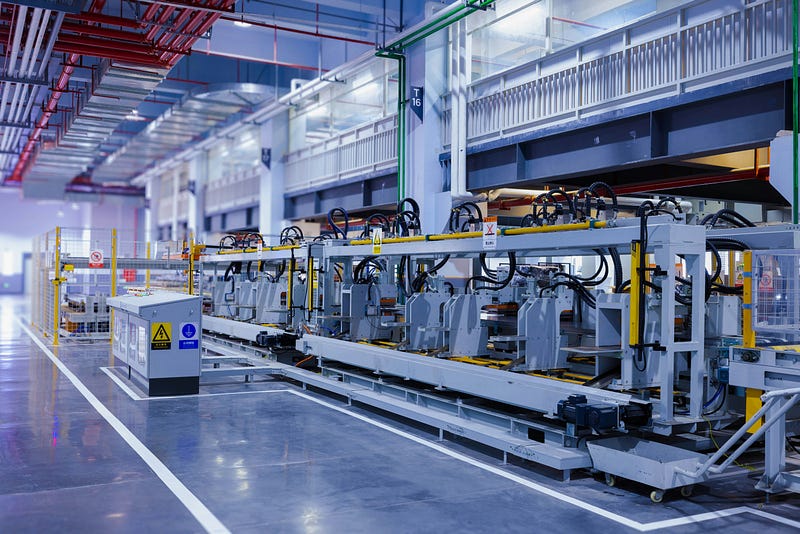
Robotics and automation have reshaped factories, enhancing efficiency while reducing reliance on manual labor.
Job Opportunities:
- Supervisors now manage robotic assembly lines instead of performing repetitive tasks themselves.
- Maintenance and programming roles for automated systems have seen significant growth.
Automation Risks:
- Positions like welders and assemblers face significant declines due to robotic efficiency.

3. Customer Service
AI chatbots and virtual assistants like Chat-GPT have revolutionized customer service.
Job Opportunities:
- AI specialists and content developers create and optimize chatbot scripts.
- Customer service roles now focus on handling more complex inquiries that AI cannot resolve.
Automation Risks:
- Entry-level customer service jobs are being replaced by 24/7 AI-powered solutions.
Balancing Automation and Opportunity
1. The Hybrid Workforce Model
Many industries are adopting a hybrid model where AI and humans collaborate. AI handles repetitive tasks, while humans focus on roles requiring creativity and critical thinking.
Example:
- In retail, AI analyzes consumer behavior, but human marketers use this data to create personalized campaigns.
2. Ethical Considerations
As AI reshapes industries, ethical concerns arise regarding job displacement, bias, and worker rights.
Key Questions:
- How can businesses ensure fair treatment of displaced workers?
- Are companies investing enough in reskilling programs?
3. Government Policies
Governments play a crucial role in ensuring AI benefits everyone.
Recommended Policies:
- Subsidies for reskilling programs.
- Regulations ensuring ethical AI deployment.
- Support for industries significantly impacted by automation.
Preparing for an AI-Driven Future
1. Lifelong Learning
Workers must embrace lifelong learning to stay competitive in an AI-driven job market. Courses in data science, machine learning, and robotics can help workers remain relevant.
2. Adopting a Growth Mindset
Instead of fearing job loss, workers should focus on how AI can enhance their careers by automating mundane tasks and allowing them to focus on higher-value activities.
Conclusion: Is AI a Threat or an Opportunity?
The impact of AI on jobs is a complex issue, with both challenges and opportunities. While AI will undoubtedly replace certain roles, it is also creating new industries, jobs, and possibilities.
Key Takeaways:
- Yes, AI is taking over some jobs, particularly repetitive and rule-based tasks.
- But AI is also creating new opportunities, especially in tech, education, healthcare, and creative industries.
- Adaptation is essential: Workers and businesses must embrace upskilling, reskilling, and a forward-looking mindset to thrive in an AI-driven world.
Rather than fearing AI, we should view it as a tool for innovation and collaboration. With the right balance of technological advancement and human creativity, AI can lead us toward a more productive, efficient, and inclusive future.
"🌍 AI is taking over the world, and you shouldn't be left behind! 🚀 Equip yourself with the knowledge to thrive in the age of AI. 📘 Grab your copy of ‘Is AI Taking Over Jobs, or Creating Opportunities?’ now and discover how to stay ahead, adapt, and succeed! 💡 Don’t just watch the change—be part of it. Click below to buy your copy today!"
Comments
Post a Comment